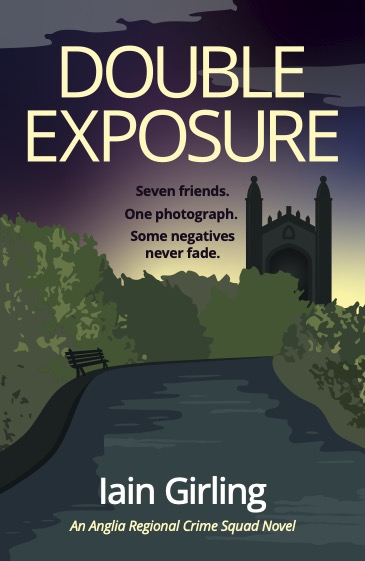
I had the pleasure of meeting my next guest at a networking event, where we chatted about his wife’s writing journey and his desire to write a book of his own. Fast forward a few years and here I am, introducing a debut author! Meet Iain Girling, author of Double Exposure, out now!
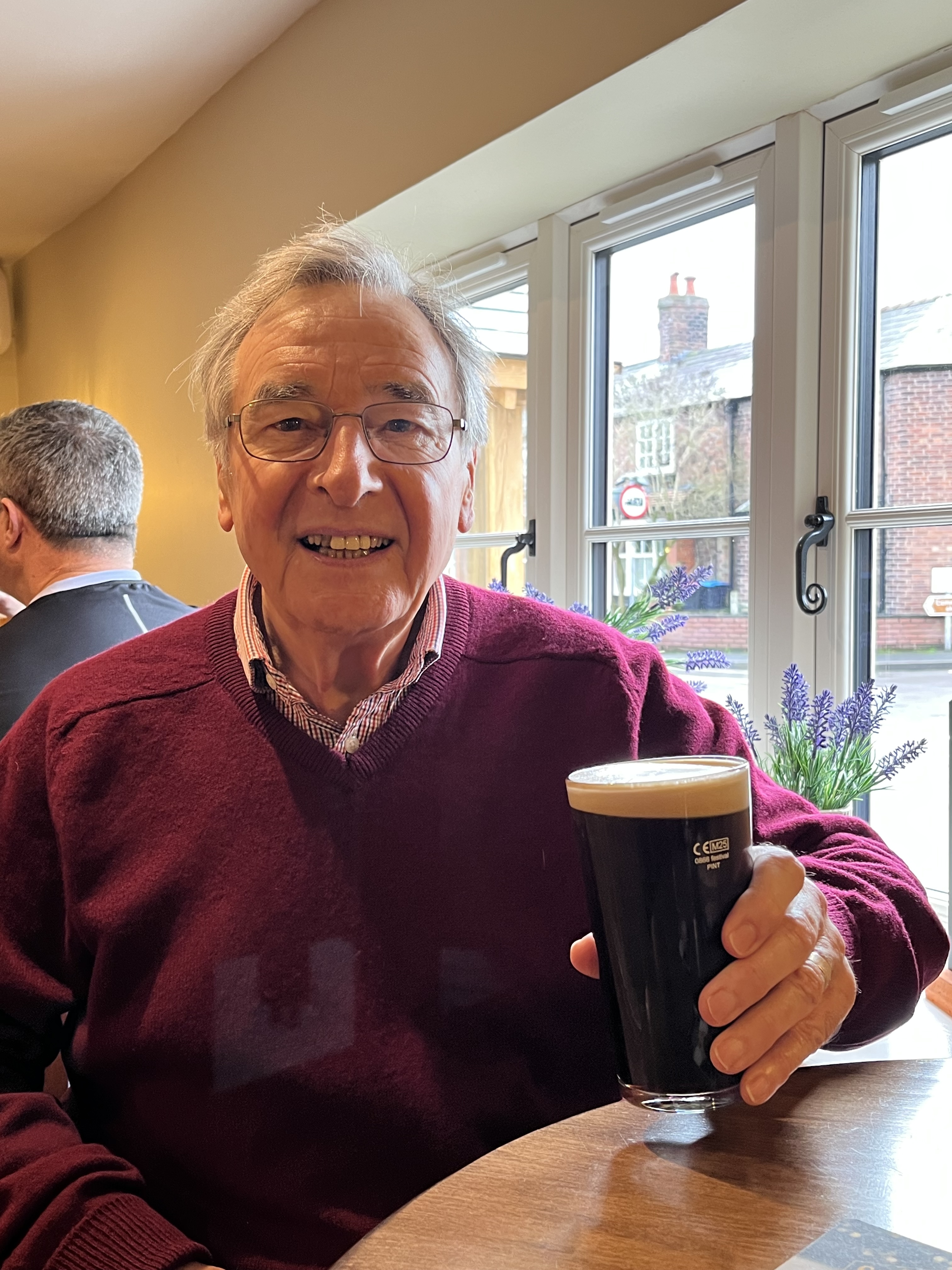
Tell us a little about yourself.
I started writing in 2018, after inheriting some old family documents. I turned them, along with my own memories, into a short autobiography.
The novel came later. I’d mentioned to an editor that I’d like to write one some day, and my wife, Ann, asked whether I really was going to. I said yes, without a story in mind, and started in the winter of 2024. Looking back, I think I must have been mad!
When I’m not writing, Ann and I love to travel, do the Saturday crossword together and walk in the countryside. In my view, a good walk should always end at a pub with a decent craft beer. I’ve also traced my family history back over 200 years.
What genre is your book, and what is it about?
Double Exposure is a crime novel, set in 1990s Cambridge, where Ann and I lived for 25 years. Early one summer morning, a man’s body is found on a bench beside the River Cam, with nothing on him to say who he is. A photograph folded in his pocket is the only clue.
It’s the first case for DCI Colin Hardman and the newly formed Anglia Regional Crime Squad, police force I invented.
Running alongside the investigation is a business storyline, drawn from my years working for myself and seeing how a company can come apart from the inside.
What or who inspired you to write this book?
Reading other authors’ books. My thinking was: if they can write books, why can’t I? Colin Dexter’s Morse and Endeavour, and Jed Mercurio’s work on police corruption, were big influences.
Part of the plot itself came from real life. A credit card arrived in the post for Ann that she’d never applied for. It got me thinking about how that kind of fraud would have worked in the 1990s, when applications had to be signed in ink and posted.
What writing advice do you have for other aspiring authors?
Have a plan that covers your scenario, your locations and your characters before you start. Do your own research rather than relying on AI, and talk to people who have the specialist experience you need. Keep a note of real situations you come across, with the names and details changed, because they’re useful later.
And don’t wait for big blocks of time. I wrote in whatever pockets of time I could find. We all get the same 168 hours in a week; what matters is what you do with them.
What do you enjoy most about writing and why?
Getting the words down in the first place can be difficult. Some days it flows brilliantly; other days I go back over what I wrote the day before and just tweak it. But once the words are on the page, I enjoy going back to a scene or a character and building the story around them.
I especially enjoyed writing DCI Colin Hardman, with all his complexities and the difficult job he has to do, and Bert Walker, a retired East End villain I grew very fond of.
List three interesting facts about yourself.
- I disliked English at school, and published my first novel 60 years later, at 78.
- I was once offered the chance to train as a magistrate, but turned it down. These days I settle matters of guilt and innocence on the page instead.
- Ann and I have been married for 48 years, and we still do the Saturday crossword together.
What is your least favourite part of the publishing/writing process, and how do you manage this?
Getting the manuscript back from a professional editor. They see things I don’t and naturally ask questions, and I’m told even well-known authors dread that moment. I manage this by reading the comments and then putting the document to one side and starting the response process one or two days later.
What can readers who enjoy your book do to help make it successful?
Leave a review on Goodreads or Amazon, or post about it on social media. Reviews make a real difference for a new author. And if you enjoyed it, tell a friend.
What is your next project?
I’m already thinking about what happens to the squad next: a second novel with the same characters, set in France and East Anglia.
Where can readers connect with you?
Website: https://iaingirling.com/
Reader list: https://iaingirling.com/reader-list
Facebook: https://www.facebook.com/profile.php?id=61586699669525
Instagram: https://www.instagram.com/iain_girling_speaking_my_mind/
Buy book on Amazon: https://amzn.eu/d/0dZmOe5J
Double Exposure Blurb
Early one summer morning, a walker finds a man’s body on a bench beside the River Cam. He is well dressed and freshly groomed, with a used syringe at his feet. There is no identification, and no one has reported him missing. For DCI Colin Hardman and his newly formed Anglia Regional Crime Squad, it looks at first like a straightforward overdose. Then the postmortem reveals something nobody can explain: the dead man could never have reached that bench by himself.
As DS Jamie Parker puzzles over a set of tyre tracks on the towpath and DC Fiona Chalmers works her first major case, a second, unrelated case lands on the squad’s desk. Across Cambridge, a family business has been bled dry, its accounts drained by a bookkeeper who has vanished without a trace.
At the centre of both cases lies a single photograph, folded into the dead man’s pocket. It shows seven old university friends at a 1988 reunion: the Tortoiseshell Troupe, their friendship sealed with matching butterfly tattoos. Someone blames that group for destroying a life, and that someone has been patient, planning, and watching.
As the evidence accumulates, Hardman realises the Troupe are being targeted, one by one. Hardman must work out what the photograph means before anyone else pays a debt from their past.
Double Exposure introduces DCI Colin Hardman and the Anglia Regional Crime Squad in the first novel of the series.
Author Bio
Iain Girling wrote Double Exposure, his debut novel and the first in the Anglia Regional Crime Squad series, published in November 2026. It started with a simple conversation with an editor, when he mentioned he’d like to write a book one day. Then, over a glass of wine, his wife, Ann, asked whether he really meant it. He said yes, and even without a story in mind yet, saw no reason to wait. He likes to remind people that everyone gets the same 168 hours in a week; what matters is what you decide to do with them. When he’s not writing, Iain and Ann love to travel, walk the UK countryside (preferably ending at a cosy pub with craft beers), and enjoy genealogy, having so far traced his family history back over 200 years.


